
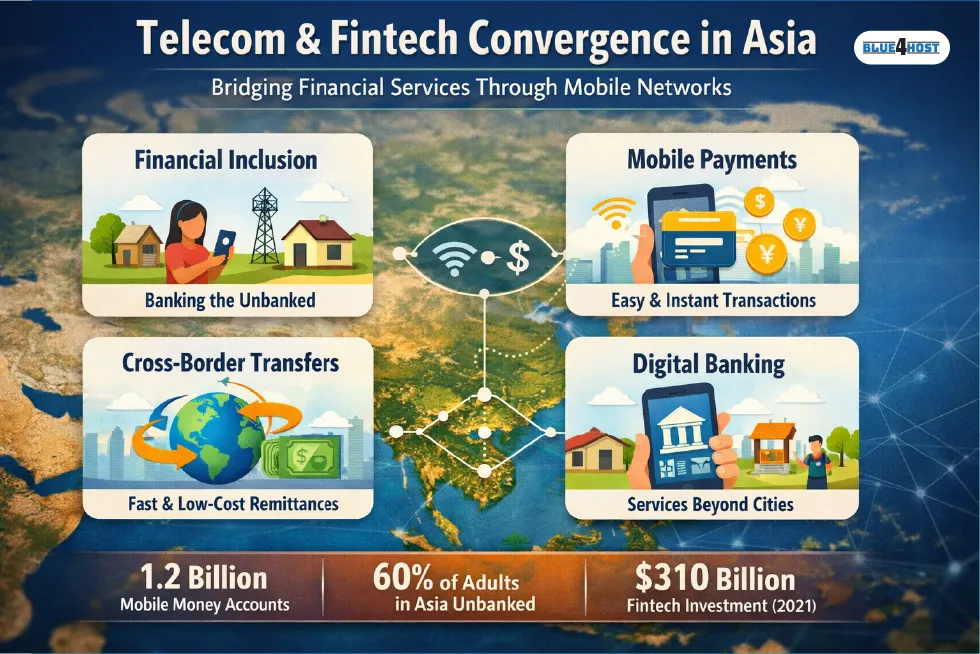
When people talk about fintech in Asia, the conversation usually jumps straight to apps, startups, or shiny digital wallets. But behind all of that innovation, there’s a quieter force doing a lot of the heavy lifting — telecommunications infrastructure. This is exactly where the idea often discussed on FintechAsia Net around the “telekom” shift fits in.
At a high level, this isn’t a product, company, or official brand called fintechasia .net telekom. Rather, it’s a way of describing a real industry trend frequently analyzed on FintechAsia.net: the convergence of fintech platforms across Asia with large telecom operators that already connect hundreds of millions of people every day. Together, they’re reshaping how financial services are delivered, especially in markets where traditional banking still struggles to reach everyone.
And honestly, this matters more than most people realize.
Understanding FintechAsia Net and Its Role in Digital Finance
FintechAsia Net functions as a regional knowledge hub focused on Asia’s fast-moving digital finance ecosystem. It covers fintech companies, regulatory changes, digital banking models, and payment innovations across South Asia, Southeast Asia, and East Asia.
What sets FintechAsia Net apart is that it doesn’t look at fintech in isolation. Much of its analysis connects financial products to the underlying infrastructure that makes them usable at scale — mobile networks, cloud platforms, digital identity systems, and payment rails. In Asia, telecom infrastructure consistently shows up as a critical layer.
Asia isn’t short on fintech ideas. What it needs is reach, reliability, and real-time connectivity — all things telecom networks already provide.
Why Telecom Infrastructure Is the Missing Link in Fintech Growth
In many Asian countries, traditional banks remain heavily concentrated in urban areas. Physical branches are expensive, onboarding is slow, and formal documentation requirements exclude large parts of the population. Telecom networks, on the other hand, already reach deep into rural and semi-urban regions.
This isn’t theory — it’s reality for millions of people.
Telecom operators manage SIM-based identity, billing relationships, and customer verification at massive scale. Fintech platforms can build on top of this through models like carrier billing, mobile money, and telco-backed e-wallets. This is exactly how services such as GCash (Philippines, via Globe Telecom), M-Pesa (originally via Safaricom), and Jio-linked payment platforms in India scaled so quickly.
That’s why the telecom–fintech convergence highlighted across FintechAsia Net coverage resonates. Finance scales faster when it rides on networks people already trust and use every day.
Financial Inclusion at Scale: Why This Model Works
One of fintech’s biggest promises has always been financial inclusion, but apps alone don’t solve the problem. Inclusion happens when systems are accessible, affordable, and familiar.
According to World Bank Global Findex data, mobile money accounts have been the single biggest driver of financial inclusion in developing economies over the past decade, helping reduce the number of unbanked adults worldwide by hundreds of millions. GSMA reports also show that Asia-Pacific now accounts for a significant share of the world’s mobile money users, with transaction volumes growing year over year.
When users can open a digital wallet using just a phone number, send money instantly, and receive payments without stepping into a bank branch, the barrier drops dramatically.
Traditional Banking vs Telecom-Enabled Fintech Access
| Feature | Traditional Banks | Telecom-Enabled Fintech |
|---|---|---|
| Physical branch required | Often yes | No |
| Onboarding time | Days or weeks | Minutes |
| Minimum balance | Common | Often none |
| Identity method | Paper-based KYC | SIM / mobile KYC |
| Rural availability | Limited | High |
This gap explains why telecom-fintech models continue to expand across Asia.
Key Areas Where FintechAsia Net’s “Telekom” Coverage Shows Real Impact
Mobile Payments and Digital Wallets
Mobile payments and digital wallets thrive when latency is low and uptime is high. Telecom networks provide both. By embedding fintech services into mobile ecosystems, users can make real-time payments, top up balances, pay bills, and manage funds directly from their phones.
For many first-time users, a telco-backed wallet is their entry point into the digital economy.
Cross-Border Payments Without the Headache
Cross-border payments have long been expensive and slow through traditional banking channels. Telecom-enabled fintech platforms reduce friction by combining digital identity, instant confirmations, and streamlined routing.
For migrant workers across Asia — from South Asia to the Gulf, or within ASEAN — this means faster remittances and fewer hidden fees, directly impacting household income.
Digital Banking Beyond Urban Centers
In rural areas, a mobile signal is often easier to find than a bank branch. Telecom-backed digital banking allows users to save, borrow, insure, and transact without geographic limits.
This is particularly valuable for farmers, gig workers, and micro-entrepreneurs who operate outside formal financial systems but still need access to payments and credit.
How Telecom Companies Benefit From Fintech Integration
This convergence isn’t one-sided.
Telecom companies unlock new revenue streams when fintech services run on their networks. Instead of competing purely on data pricing, they can offer higher-margin value-added services like payments, lending access, and merchant tools.
It also improves customer retention. When financial services are tied to a mobile account, users are far less likely to switch providers. From a business perspective, the fintech–telecom model discussed on FintechAsia Net reflects smarter, more sustainable monetization of telecom infrastructure.
Real-World User Experience: Why Adoption Feels Natural
One reason this model works is behavioral familiarity. People already trust their mobile providers. They understand prepaid balances, OTPs, and phone-based verification.
Layering financial services on top doesn’t feel disruptive — it feels intuitive.
Users aren’t thinking about backend architecture. They’re thinking, “I can send money instantly,” or “I don’t need to travel two hours to reach a bank anymore.” That’s how adoption actually happens.
Challenges the Industry Still Needs to Solve
Of course, the model isn’t perfect.
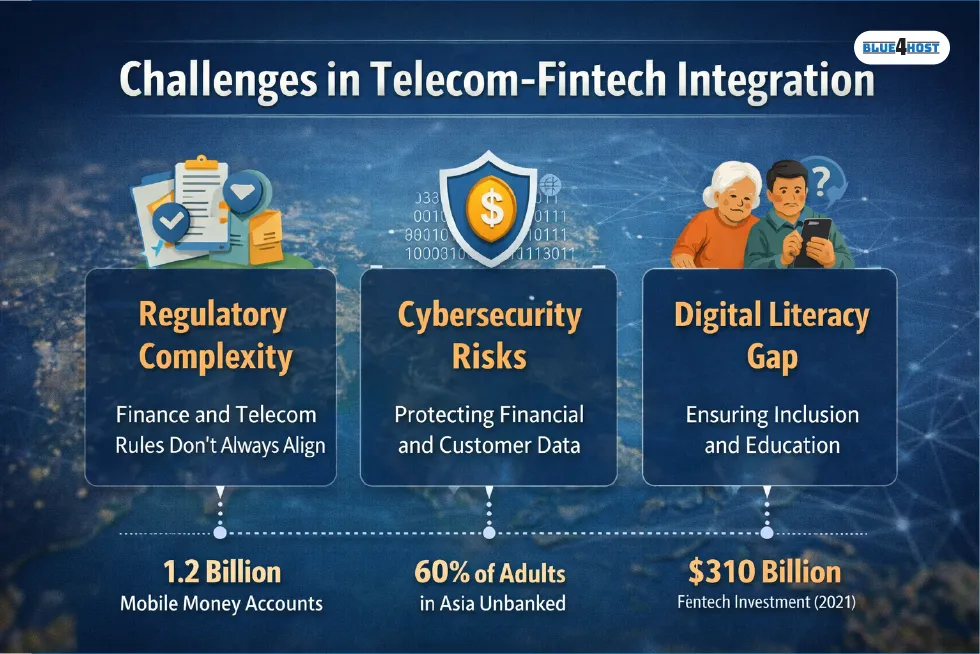
Regulation remains fragmented. Financial services, telecom operations, and data protection often fall under different regulators, creating compliance complexity — especially for cross-border services. Cybersecurity risks also increase when financial data and telecom records intersect, raising the stakes for data protection.
There’s also the issue of digital literacy. Access alone isn’t enough; users need education, transparency, and clear consumer protections to avoid misuse or over-indebtedness.
Still, these challenges are being actively addressed across the region, not ignored.
Pros and Cons of the Telecom–Fintech Model
Pros
- Rapid expansion of financial access
- Leverages existing telecom reach
- Enables real-time payments and wallets
- Strong impact on rural financial inclusion
Cons
- Complex regulatory environments
- Higher cybersecurity responsibility
- Dependence on network reliability
FAQs About Fintech and Telecom Convergence in Asia
A fintech company uses technology to deliver financial services more efficiently — such as payments, lending, insurance, investing, or banking — often through mobile apps and digital platforms rather than physical branches.
Asia is the largest and fastest-growing fintech region globally. Industry estimates place the market value in the hundreds of billions of dollars, driven by massive populations, high mobile adoption, and strong demand for digital financial services.
Fintech salaries vary widely by role and country. Technical roles like software engineers, data scientists, and product managers often earn above traditional banking averages, especially in major Asian tech hubs.
Fintech itself is neutral — its impact depends on implementation and regulation. When done well, it improves access, lowers costs, and boosts inclusion. When poorly regulated, it can increase risk or consumer harm.
Final Thoughts: Why This Trend Isn’t Slowing Down
The telecom–fintech convergence highlighted across FintechAsia Net isn’t flashy, but it’s powerful. It recognizes that real innovation happens when technology aligns with existing behavior and infrastructure.
By combining fintech solutions with telecom networks, Asia is building a more inclusive, efficient, and scalable financial system. As digital finance evolves, the real winners won’t just be those with the slickest apps, but those who understand distribution, trust, and everyday usability.
If you’re watching the future of digital banking, payments, and financial inclusion in Asia, this is one trend you really shouldn’t ignore.
Visit our website: Blue4Host